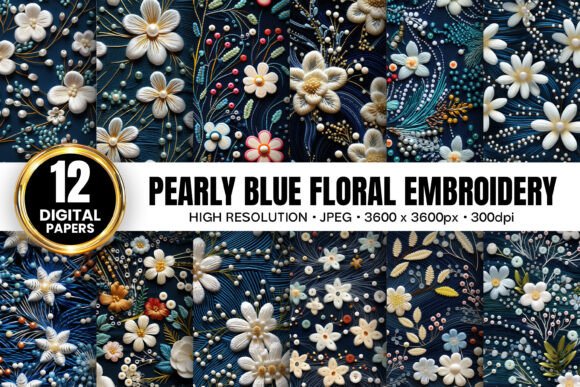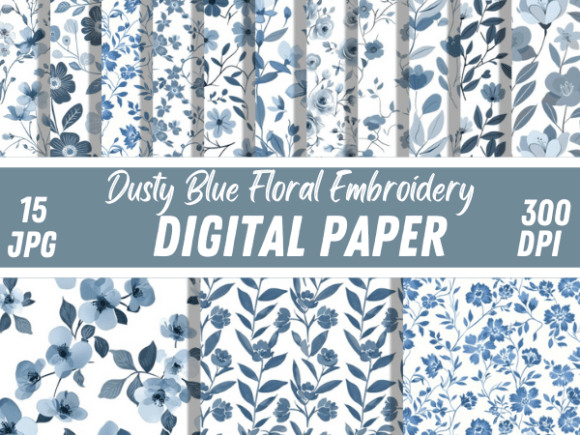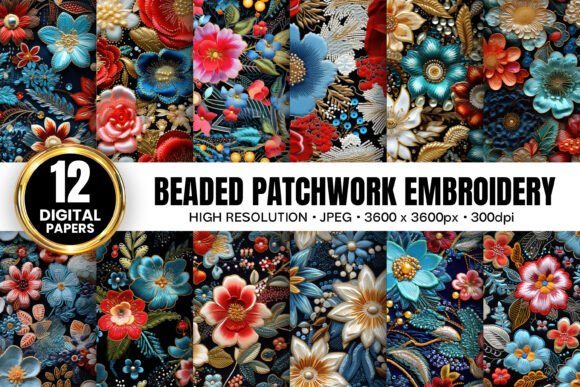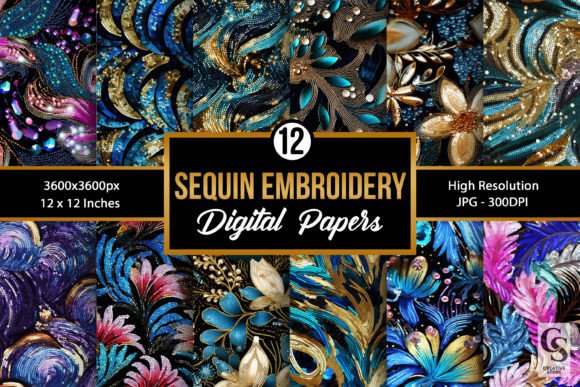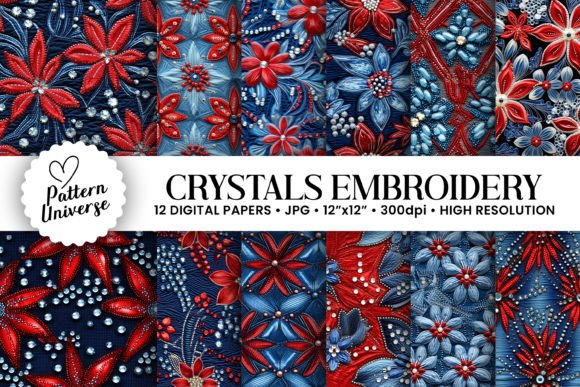
Red Blue Crystals Embroidery Patterns
As an embroidery designer who has spent years turning digital concepts into tangible, high-quality merchandise, I approach every new asset with a mix of excitement and skepticism. When Red Blue Crystals Embroidery Patterns landed in my review queue, my immediate question was not just about aesthetics, but about viability. Could this design survive the rigors of production? Would it translate well from a screen to the needle plate of a commercial machine? And most importantly, would it add value to a small business’s brand identity?
The product description highlights that these are AI-generated seamless patterns intended for gift wrapping, greeting cards, invitations, tumbler wraps, backgrounds, and scrapbooking. While the listed uses lean heavily toward paper goods and digital backgrounds, the visual language of "crystals" suggests a texture and depth that can be incredibly effective in textile applications. In this review, I will evaluate how Red Blue Crystals Embroidery Patterns performs when adapted for embroidered patches, staff uniforms, aprons, caps, tote bags, and other small business merch.
First Impressions: Visual Personality and Brand Alignment
The title alone sets a specific tone. The combination of red and blue crystals evokes a sense of premium energy, modern elegance, and perhaps a touch of playful vibrancy. Unlike traditional floral or geometric motifs, crystal-inspired designs often feature sharp angles, high contrast, and a faceted appearance. For a small business owner—whether running a boutique, a creative studio, or a local café—this visual personality can signal quality and attention to detail.
When viewing the design assets, the first thing I look for is clarity. Do the lines hold up at small scales? Does the color palette clash or complement? Red and blue are powerful complementary colors. When used correctly, they create a dynamic visual pop that draws the eye without overwhelming the viewer. This makes Red Blue Crystals Embroidery Patterns particularly suitable for brands that want to appear bold yet sophisticated. It feels less like a rustic, handmade craft item and more like a polished, professional graphic asset. This distinction is crucial for businesses aiming for a higher price point or a corporate aesthetic.
Real-World Business Applications
So, where does this design shine in a commercial context? Let’s break down its potential across various merchandise categories.
- Embroidered Patches: The seamless nature of the pattern makes it ideal for all-over patch designs. Imagine a full-square patch featuring the crystal motif as a background for a logo, or the entire patch being a stylized cluster of crystals. This works exceptionally well for denim jackets, backpacks, and limited-edition tote bag designs.
- Staff Uniforms and Aprons: For cafes, bakeries, or florists, uniform branding is key. A subtle application of the crystal pattern on the cuff of an apron or as a chest pocket accent adds a layer of professionalism. It elevates the standard work shirt from plain utility wear to branded custom apparel.
- Cap Embroidery: Caps are a staple of small business merch. However, complex patterns can get lost on curved surfaces. If the crystal design is simplified into a central emblem, it can serve as a striking focal point on the front panel of a cap, offering a unique alternative to standard text-based logos.
- Tote Bag Design: Canvas totes are ubiquitous in the Etsy seller and craft business space. Using Red Blue Crystals Embroidery Patterns as an embroidered border or a large central graphic transforms a basic tote into a premium product. The texture of the embroidery contrasts beautifully with the flat fabric, enhancing the tactile experience for the customer.
- Product Packaging Accents: While primarily an embroidery file, the design’s versatility allows it to be printed on hang tags or packaging inserts. Consistency between your physical product (the embroidery) and your unboxing experience (the print) reinforces brand recognition.
Where Caution Is Required
Not every design fits every application. As a designer, I must highlight areas where Red Blue Crystals Embroidery Patterns might face challenges if not handled with care.
Small Patch Sizes: If you intend to use this design on very small patches (under 2 inches), complexity becomes the enemy. Crystal patterns often involve intricate detailing. At tiny scales, individual stitches may merge, creating a muddy appearance rather than a crisp image. Always test at actual size before committing to production.
Curved Surfaces and Cap Fronts: Embroidering on curved surfaces like the front of a cap requires precise hooping and stabilizer choice. Complex patterns can distort if the fabric stretches unevenly during stitching. Ensure your digitizer accounts for the curvature of the target garment.
High Stitch Density: Designs with dense fills can become stiff and heavy. On delicate fabrics like silk or thin cotton blends, excessive stitch density can cause puckering or even tear the fabric over time. Review the thread colors and spacing to ensure the density is appropriate for the intended fabric texture.
Detailed Outlines and Tiny Lettering: If the design includes fine outlines or small text, verify that these elements are legible after washing. Frequent washing can cause fraying in high-detail areas. For items that need frequent laundering, such as staff uniforms, opt for simpler, bolder interpretations of the crystal motif.
Impact on Brand Identity and Customer Trust
In the world of handmade products and small business merch, perception is everything. High-quality embroidery signals that a brand cares about details. When a customer sees a well-executed embroidered patch or a neatly stitched apron embroidery, it subconsciously communicates reliability and professionalism.
Using Red Blue Crystals Embroidery Patterns strategically can enhance visual consistency across your product line. If your online store features crystal-themed graphics, translating those same elements into physical embroidery creates a cohesive brand story. This consistency builds customer trust and increases the perceived value of the finished product. Buyers are often willing to pay a premium for items that feel uniquely crafted and thoughtfully designed.
Practical Designer Notes for Production
Before you send any files to production, follow these essential steps to ensure success:
- Test in Black and White: Convert the design to grayscale to check contrast. If the red and blue elements blend together without color, the design may lack definition. Good contrast ensures readability regardless of thread color choices.
- Check Small Scale Legibility: Zoom out or view the design at 50% scale. Does it still look balanced? This helps identify potential issues with spacing and element distribution.
- Review Thread Color Contrast: Select thread colors that stand out against your target fabric. Dark blue on black fabric, for example, may disappear. Use light threads for dark fabrics and vice versa.
- Inspect Spacing and Hoop Size: Confirm that the design fits within your machine’s hoop size. Adjust the placement if necessary to avoid edge cuts or awkward positioning.
- Test on Real Fabric: Never skip the sample run. Stitch the design on the actual fabric you plan to use. Observe how the stabilizer interacts with the material and whether the final result meets your quality standards.
- Create a Printable Mockup: Before investing in bulk production, create a digital mockup to present to clients or for marketing purposes. This helps visualize the final product and gather feedback.
- Compare Beside Other Assets: Place the design next to your existing logo and brand guidelines. Does it complement them, or does it compete for attention? Harmony is key to a strong brand identity.
- Confirm Commercial Licensing: Since this is a digital embroidery file, ensure you have the correct license for commercial use. Check the terms regarding the number of units you can produce and distribute.
In conclusion, Red Blue Crystals Embroidery Patterns offers a versatile and visually striking option for small business owners looking to elevate their merchandise. By understanding its strengths and limitations, you can transform these digital graphics into high-value physical products that resonate with your customers. Whether used for branded patches, custom apparel, or boutique accessories, this design has the potential to make a lasting impression.