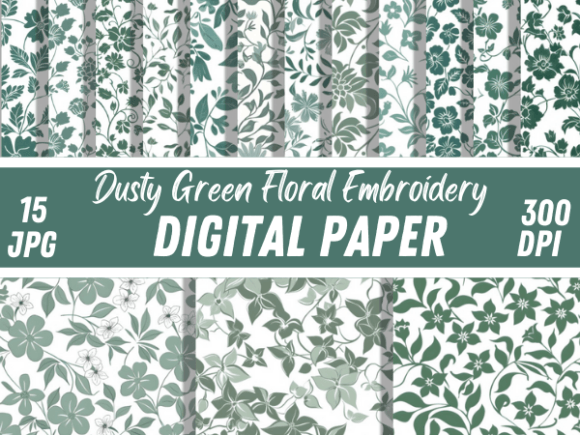
Dusty Green Floral Embroidery Patterns Review
As an embroidery designer who spends weekends hunched over my machine and Sundays setting up booths for local craft fairs, I have learned one hard truth: a design must sell itself in three seconds. When a customer walks past your table, they are not reading the tag. They are looking at texture, color, and composition. That is why I took a close look at the Dusty Green Floral Embroidery Patterns before deciding whether to put it on my tote bags and aprons this season.
This machine embroidery design comes with a description that screams "shabby chic" and "rustic elegance." It promises a seamless pattern filled with leaves, flowers, and a cozy, handcrafted texture. For any Etsy seller or small shop product creator, the question is simple: does this translate from a digital screen to a physical object that people want to buy? Here is my real-world review of how this graphics asset performs in production and on display.
First Impressions: The Shabby Chic Aesthetic
The name alone sets the mood. "Dusty Green" suggests a muted, sophisticated palette that fits perfectly into the modern farmhouse trend without being overpowering. Unlike bright, neon florals that can look cheap or childish, dusty green feels premium. It pairs beautifully with natural fabrics like linen, cotton canvas, and unbleached muslin.
When I first viewed the digital embroidery file, the immediate takeaway was its versatility. The seamless nature of the pattern means it is not just a single motif but a repeating texture. This is crucial for commercial embroidery because it allows you to create large-scale focal points on items like pillow covers or full-length aprons without running out of space in the hoop. The inclusion of "knitted garden rustic flower" elements in the description hints at a textured, organic feel rather than rigid, geometric shapes. This softness is exactly what draws customers into handmade goods. It feels homely and inviting, which is the emotional hook we need for gift-oriented products.
Product Application: Where It Shines
Not every embroidery pattern works on every item. Based on the visual weight and style of the Dusty Green Floral Embroidery Patterns, here is where I see the highest potential for sales:
- Tote Bag Design: This is perhaps the strongest application. A large, seamless floral block on the front of a sturdy canvas tote bag looks incredibly high-end. The green tones pop against neutral beige or white canvas, creating a craft fair product that stands out among generic printed bags.
- Apron Embroidery: For kitchen-themed gifts, this pattern works well as a border along the bib or scattered across the pocket area. The rustic vibe complements the utilitarian nature of an apron, making it feel like a heirloom piece rather than a disposable kitchen tool.
- Tea Towel Embroidery: Tea towels are impulse buys. A smaller, cropped version of this seamless pattern can be stitched onto a folded towel. The "cozy traditional" aspect of the design makes it perfect for housewarming gifts or holiday markets.
- Embroidered Patch: If you plan to sell patches as accessories for denim jackets or backpacks, the dense floral clusters likely work well. However, you must ensure the background is stabilized properly so the patch holds its shape.
- Pillow Covers: The seamless nature is ideal here. You can center the pattern on a square pillow, allowing the design to flow naturally around the edges. This elevates the finished product from a craft project to home decor.
While these items show promise, I would advise caution with curved cap surfaces. Unless you are using a specialized cap hoop and have significant experience, complex seamless patterns can distort on the curve of a baseball cap. Stick to flat surfaces for your first run.
Production Practicality and Stitch Density
From a technical standpoint, the success of this embroidery file depends heavily on execution. The description mentions "texture" and "knitted" effects. In embroidery, texture is often achieved through stitch density and thread choice, not just the design outline.
You need to check the stitch density carefully. If the design is too sparse, it will look thin and flimsy on fabric. If it is too dense, it may pucker lightweight fabrics like tea towels. Since this is a floral leaf pattern, there will likely be areas of satin stitches for stems and fill stitches for petals. Ensure your machine settings match the recommended density for the fabric you are using.
Thread colors are critical. Dusty green is a low-contrast color if placed on dark green fabric. To make the design visible, pair it with lighter backgrounds such as cream, oatmeal, light grey, or even a soft blush pink. The contrast between the thread and the fabric texture will determine whether the design looks crisp or muddy.
Photography and Online Presentation
For any Etsy seller or online boutique maker, your photos are your storefront. The Dusty Green Floral Embroidery Patterns lends itself well to lifestyle photography. Because of its rustic and shabby chic vibe, it photographs beautifully with natural lighting and props like dried flowers, wooden tables, or coffee cups.
Create a printable mockup early in the process. Before you commit to embroidering ten aprons, stitch one sample and photograph it. Does the green look vibrant? Do the leaves lose detail when zoomed out? Use these images to test your Etsy listings. A strong visual narrative helps justify a higher price point for your handmade product.
Designer’s Checklist for Success
Before you rush to produce inventory for the next market season, follow these practical steps to ensure quality and avoid costly mistakes:
- Test on Scrap Fabric: Never assume a design will work on your final material. Stitch the design assets on the exact type of canvas, linen, or cotton you plan to use. Check for puckering or thread breaks.
- Check Hoop Size: Verify that the largest repeat of the seamless pattern fits within your available hoop size. If the design is larger than your hoop, you will need to plan for multi-hooping, which adds time and potential alignment errors.
- Use the Right Stabilizer: For heavy floral fills, a cut-away stabilizer is often necessary to prevent distortion, especially on stretchy fabrics. For stable cottons, a tear-away might suffice, but always err on the side of support.
- Inspect Stitch Density: Look closely at the embroidery design file. Are there areas where stitches overlap excessively? These can cause needle breakage or thick, uncomfortable bumps on the finished garment.
- Confirm Commercial Licensing: This is non-negotiable. Ensure you have the right to sell finished products made with this digital embroidery file. Some licenses restrict the number of items you can sell or prohibit certain uses.
- Create Real Mockups: Don't rely solely on digital previews. A physical sample reveals issues with thread sheen and fabric drape that screens cannot show.
Final Verdict
The Dusty Green Floral Embroidery Patterns is a strong candidate for any maker looking to tap into the farmhouse and shabby chic markets. Its aesthetic is timeless, versatile, and highly photogenic. It works exceptionally well on tote bags, aprons, and home decor items where the texture and color can truly shine.
However, its success depends on your attention to detail during production. Pay close attention to thread contrast, choose the correct stabilizer, and always test before you scale up. If executed well, this pattern has the potential to become a best-selling small shop product that captures the eye of buyers at craft fairs and online alike. Just remember: in the world of handmade goods, quality and presentation are everything. Make sure your stitching is clean, your backing is hidden, and your branding is consistent. With the right approach, this floral design will not just sit on your shelf—it will fly off it.