Creative Fabrica Crystal Embroidery Seamless Patterns Review
As an embroidery designer who spends most of my days balancing stitch density, thread tension, and client deadlines, I am always cautious when downloading new design assets. The market is flooded with graphics that look beautiful on a screen but translate poorly to fabric. Recently, I came across the Creative Fabrica embroidery product titled "Crystal Embroidery Seamless Patterns," and I decided to put it through its paces. My goal was simple: determine if these digital papers could realistically elevate a commercial project or if they were better left as background textures for printable mockups.
I approached this review not just as a critique of the visual art, but as an evaluation of its utility for real-world handmade products. Whether you are an Etsy seller looking for a unique touch on your shop’s branding or a small business owner creating custom apparel, understanding how a graphic performs in the hoop is critical. Here is my honest assessment of using Crystal Embroidery Seamless Patterns for actual embroidery work.
First Impressions: Visual Mood and Detail Level
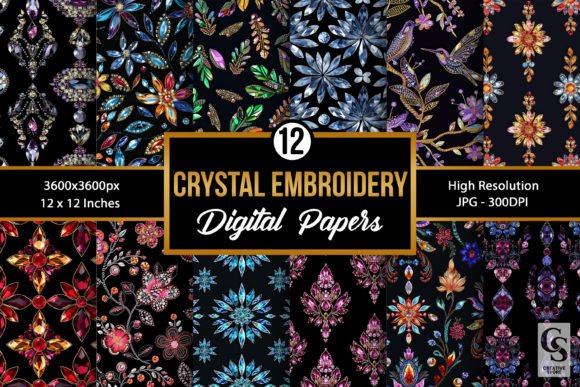
The package includes 12 digital papers within one zip file, all provided as high-resolution JPG files at 3600 x 3600 pixels (12″ x 12″) at 300dpi. From a technical standpoint, this resolution is excellent for scaling. It means you can zoom in without seeing pixelation, which is vital when planning where to place elements within a specific hoop size.
Visually, the "Crystal" theme suggests a sparkling, faceted aesthetic. In the context of embroidery, this immediately brings to mind the potential use of satin stitches to mimic light reflection. The patterns feel decorative and elegant, leaning towards a feminine, luxurious vibe. They naturally fit projects that require a touch of glamour, such as bridal accessories, luxury gift wrapping concepts, or high-end nursery decor. However, the intricate nature of crystal-like imagery also raises questions about stitchability. Fine lines and tiny geometric details can be challenging for machines to render cleanly, especially if the design is scaled down too much.
Practical Application in Real Projects
I considered several scenarios where these seamless patterns might add value to a handmade product. Let’s break down how they might perform in different categories.
Custom Apparel and Tote Bags
For a tote bag design, a seamless pattern can serve as a bold background block. If printed directly onto fabric before embroidering a monogram, it adds depth. However, if you intend to embroider the pattern itself, you must consider the fabric type. On canvas totes, the texture might interfere with fine detail. On smooth cotton blends, the result could be stunning, provided you use a proper stabilizer to prevent puckering. For sweatshirt embroidery, a large-scale application of the crystal pattern could create a striking chest piece or back print, though it would likely require significant fill stitch usage, which can make the garment stiff.
Baby Items and Nursery Decor
Soft, elegant designs are popular in the baby niche. These patterns could work beautifully for personalized gift items like burp cloths or quilted blankets. The key here is scale. A full-coverage pattern might overwhelm a small item like a bib. Instead, using the pattern as a border element around a central embroidered name or motif often yields a more professional look. For pillow covers, the seamless nature allows for continuous designs that wrap nicely, enhancing the visual appeal of the finished product.
Commercial Embroidery and Branding
If you are selling commercial embroidery services, consistency is king. Using a unique, high-quality pattern like this can differentiate your brand from competitors who rely on generic clipart. It adds a layer of sophistication that customers appreciate. When used in printable mockups for digital downloads, these images help sellers visualize how their text or logos will look against a textured background, potentially increasing conversion rates by showcasing a premium feel.
Technical Challenges and Considerations
While the visual potential is clear, translating a complex graphic into machine-readable code requires careful planning. Here are the practical hurdles you may encounter:
- Stitch Density and Detail: Crystal patterns often feature sharp angles and fine intersections. If the stitch density is too high, the needle may break or the fabric may pucker. You may need to convert some areas to running stitch or simplify the geometry to maintain clarity.
- Thread Color Contrast: The success of any embroidery depends on thread choice. Against dark fabric, lighter threads may get lost in the texture of the material. Always test color contrast on scrap pieces of your target fabric. Light fabrics offer more flexibility but may show every imperfection in the stitching.
- Hoop Size Limitations: Before digitizing, check the dimensions of your intended area. If the pattern needs to be scaled down significantly to fit a standard 4x4 inch hoop, tiny details may disappear or merge together. Larger hoops allow for more fidelity but limit where you can place the design on garments like caps or sleeves.
- Fabric Stability: Stretchy fabrics, common in activewear or fitted tees, require strong stabilizers to keep the pattern straight. Without adequate support, the seamless flow of the design can distort during stitching.
Enhancing Product Value and Buyer Trust
Investing time in high-quality design assets pays off in customer perception. A well-executed embroidery project signals professionalism. When buyers see intricate, clean stitching that captures the essence of a complex pattern, they associate that quality with the entire brand. This builds buyer trust and encourages repeat purchases. Furthermore, unique designs like these make for better product photography. A tote bag with a sophisticated crystal pattern stands out in social media feeds, driving engagement and clicks.
Additionally, using these patterns allows for greater brand consistency. You can apply the same motif across various products—caps, patches, kitchen towels—creating a cohesive collection that feels curated rather than random. This approach is particularly effective for Etsy listings and craft fair booths where visual harmony attracts attention.
Final Recommendations for Use
Before incorporating Crystal Embroidery Seamless Patterns into your production workflow, I recommend the following steps:
- Test on Scrap Fabric: Never run a full production order without testing the digitized version on the exact fabric and stabilizer combination you plan to use.
- Review File Details: Confirm the licensing terms on the Creative Fabrica product page. Ensure you have the right to use the designs for commercial purposes, especially if you are selling finished goods.
- Inspect Small Details: Zoom in on your digitizing software to identify any areas that might cause thread breaks or clumping. Simplify where necessary.
- Compare Mockups: Create both light and dark fabric mockups to ensure the design remains legible and attractive across different colorways.
In conclusion, Crystal Embroidery Seamless Patterns offers a versatile and visually appealing resource for designers willing to invest the time in proper digitization. While it presents challenges regarding detail and density, the payoff in terms of aesthetic uniqueness and perceived value is significant. For those looking to elevate their custom apparel or create standout embroidered patches, this set is worth exploring. Just remember that good embroidery is as much about preparation and technique as it is about the source file. By treating these graphics with the respect they deserve, you can create finished products that truly shine.