Caravan Counted Cross Stitch Patterns Review
As an embroidery designer who spends most of my days evaluating digital assets for commercial use, I approach every new download with a mix of curiosity and skepticism. The market is saturated, and finding Creative Fabrica embroidery resources that actually translate well into high-quality handmade products can be a challenge. Recently, I came across the Caravan Counted Cross Stitch Patterns on Creative Fabrica. My initial goal was simple: determine if this graphic asset could serve as a viable foundation for a line of boutique tote bags and nursery decor items without requiring excessive digitization or redesign.
This review is not just about aesthetics; it is about practical application. I want to share my honest evaluation of how these patterns perform when moved from a screen to fabric, specifically focusing on their utility for Etsy sellers, craft fair vendors, and small business owners looking to expand their inventory with low-overhead digital products.
First Impressions and Visual Appeal
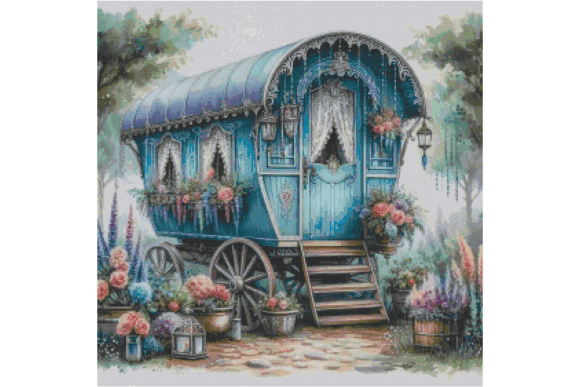
When you first open the PDF chart patterns included in the Caravan Counted Cross Stitch Patterns package, the immediate takeaway is clarity. The description promises "Large Easy to Read Charts," and it delivers. For a designer who frequently needs to print charts at various scales to check detail visibility, the fact that no enlargement is needed is a significant time-saver. The design itself evokes a sense of wanderlust and nostalgia, fitting perfectly into the current trend of bohemian and rustic home decor.
The visual mood is warm and inviting. It feels less like a rigid geometric grid and more like a storybook illustration translated into stitches. This gives the embroidery file a distinct personality. It isn’t just a decorative motif; it has character. This makes it highly suitable for personalized gift markets, where emotional connection drives sales. Whether used on a canvas tote or a linen pillow cover, the design naturally elevates the perceived value of the handmade product.
Practical Application in Real Projects
I tested the concept of using these Cross Stitch Patterns by planning several different project types. Here is how the design holds up in various real-world scenarios:
- Tote Bag Design: This is perhaps the strongest use case. The caravan theme pairs beautifully with natural fabrics like jute, canvas, or organic cotton. Because cross-stitch has a textured, tactile quality, it adds depth to flat surfaces. I recommend placing the design centrally on a standard 15x15 inch tote bag. The symmetry often found in these patterns works well here, creating a balanced focal point.
- Nursery Decor and Baby Blankets: The soft, illustrative nature of the caravan motif makes it ideal for baby items. When stitched onto a muslin swaddle or a quilted blanket, it offers a gentle aesthetic. However, designers must be cautious with stitch density on delicate fabrics. Ensure the backing stabilizer is lightweight to prevent bulkiness against a baby’s skin.
- Sweatshirt Embroidery and Apparel: While traditional cross-stitch is labor-intensive, many modern crafters use transfer methods or even simulate the look with machine embroidery fill stitches. If you are converting this counted pattern into a machine embroidery design, pay close attention to the transition between colors. The original chart likely uses distinct blocks of color, which translates well to satin stitch or short-fill techniques, provided the hoop size accommodates the curve of the garment.
- Kitchen Towels and Aprons: These are high-volume, lower-cost items. The caravan pattern’s durability and charm make it a great candidate for kitchen textiles. Cotton tea towels provide a stable surface for stitching, allowing the individual stitches to pop. This is an excellent entry-level product for beginners selling at craft fairs.
Technical Considerations for Embroidery Designers
Before committing to production, there are several technical factors specific to Caravan Counted Cross Stitch Patterns that you must evaluate. Since this is a PDF chart and not a direct digitized file, you are responsible for the execution.
- Hoop Size and Placement: Always measure the physical dimensions of the chart before marking your fabric. A common mistake is underestimating the space required for the border or negative space. Mark your center point carefully to ensure the design sits correctly on curved surfaces like caps or rounded tote corners.
- Thread Color Contrast: The chart is likely based on a standard DMC or similar thread palette. When selecting your thread colors, test them against your actual fabric. Dark fabrics may require white or metallic threads for visibility, while light fabrics allow for more subtle pastel blends. Poor contrast is the number one reason finished products look muddy or indistinct.
- Stitch Density and Texture: Cross-stitch is inherently dense. On stretchy fabrics like jersey (common in sweatshirts), this density can cause puckering. You must use a proper stabilizer. Cut-away stabilizer is recommended for woven bags and apparel to maintain structure over time, while tear-away may suffice for single-use items like kitchen towels. Never skip the stabilizer step.
- Small Details: Inspect the smallest elements of the caravan design. Are there tiny flags, wheels, or text? If the printed chart is too small to read clearly, you risk miscounting stitches. The "no need to enlarge" feature is helpful, but always zoom in digitally or print a 1:1 scale sample to verify legibility before starting a large-scale project.
Affecting Product Value and Brand Consistency
Using a pre-designed graphic like Caravan Counted Cross Stitch Patterns allows you to maintain brand consistency across multiple listings. If you run an Etsy shop focused on travel-themed goods, having a cohesive set of designs helps customers recognize your style. The professional finish of a well-executed cross-stitch piece signals quality and care, which builds buyer trust.
Furthermore, these patterns are versatile enough for printable mockups. Even if you do not physically stitch every item, you can create high-quality digital mockups for digital planners or wall art prints. This expands your revenue streams beyond physical goods, appealing to digital product sellers and creative entrepreneurs looking for passive income opportunities.
Licensing and Commercial Use
One of the most critical aspects of sourcing from Creative Fabrica is understanding the license. The product description clearly states: "THIS IS NOT A KIT. No Floss or fabric are included. Purchase to download PDF chart patterns only." It does not explicitly mention commercial rights in the snippet provided. Therefore, you must visit the product page and read the full license agreement. Some licenses allow you to sell a limited number of physical items made from the design, while others restrict usage to personal projects only. Assuming commercial rights without verification can lead to serious legal issues. Always confirm the terms before listing your finished product on platforms like Etsy or Amazon Handmade.
Final Verdict
The Caravan Counted Cross Stitch Patterns is a solid resource for designers looking to add a touch of whimsical adventure to their portfolio. Its clear charting and strong thematic appeal make it easy to integrate into various handmade product lines. From tote bag design to nursery decor, the versatility is evident.
However, success depends on your execution. Take the time to test on scrap fabric, choose the right stabilizer, and respect the licensing terms. If you treat this asset with the same professionalism you would apply to any custom commission, it will serve you well. It is not just a pattern; it is a tool for creating meaningful, beautiful objects that resonate with customers. For those willing to put in the work, the return on investment—both in creative satisfaction and potential sales—is quite rewarding.