Butterfly Embroidery Seamless Patterns
In the world of small business branding, few things communicate quality and attention to detail quite like a well-executed embroidered patch. As an embroidery designer who has spent years translating digital concepts into tangible thread work, I look at every new asset with a critical eye. We are not just looking for pretty pictures; we are looking for viable design assets that can withstand the rigors of production and elevate a brand’s visual identity. Today, I am reviewing the Butterfly Embroidery Seamless Patterns, a collection marketed toward creators looking to add a touch of nature-inspired elegance to their merchandise.
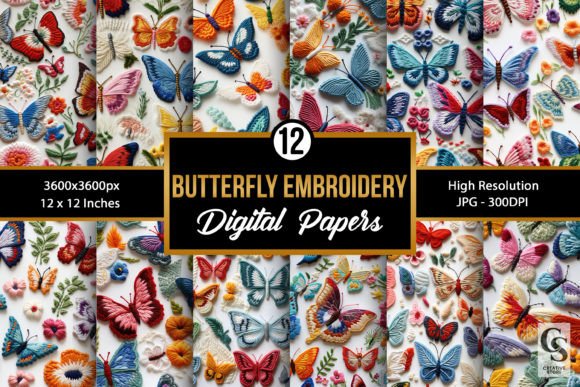
This product offers 12 digital papers within a single zip file, provided in high-resolution 300dpi JPG format at 3600 x 3600 pixels. For those of us working in custom apparel, boutique merch, and handmade brands, understanding how these graphics translate from screen to fabric is crucial. This review focuses on the practical application of these patterns for commercial use, evaluating their potential for branded patches, staff uniforms, and customer-facing products.
First Impressions: Visual Personality and Brand Fit
When you first load the Butterfly Embroidery Seamless Patterns, the immediate takeaway is versatility. The title suggests a blend of organic movement and structured repetition, which is exactly what successful seamless designs require. In my experience, "seamless" often implies a decorative border or background texture, but when applied to embroidery, it opens up possibilities for all-over prints on fabrics or repeating motifs on large garments.
The aesthetic appears to lean towards a friendly yet professional tone. Butterflies are universally recognized symbols of transformation and beauty, making them suitable for a wide range of industries. Whether you run a floral shop, a boutique bakery, a creative studio, or a pet brand, this design language feels approachable without being childish. It strikes a balance between playful and elegant, which is essential for maintaining a premium feel in your small business merch. If your brand identity relies on softness, creativity, and natural elements, these patterns align perfectly with those values.
Real-World Applications for Small Businesses
So, how does this actually perform in a production environment? Let’s break down where these embroidery files shine when integrated into a commercial workflow.
- Branded Patches: One of the most common uses for high-quality graphic patterns is creating iron-on or sew-on patches. These can be used as chest logos, sleeve accents, or back-of-cap details. The seamless nature allows for interesting layout variations, such as placing a central butterfly motif surrounded by a subtle patterned border.
- Staff Uniforms and Aprons: For cafes, florists, and bakeries, uniform consistency is key. Applying these patterns subtly on apron pockets or shirt cuffs adds a layer of professionalism and brand recognition. It transforms a standard work shirt into a branded experience.
- Tote Bags and Product Packaging: Eco-friendly tote bags are a staple for craft businesses. A seamless pattern embroidered along the hem or handles creates a sophisticated look that customers are proud to carry. Additionally, using these designs on hang tags or packaging inserts (via printable mockups) ensures visual consistency across all touchpoints.
- Event Merchandise: For pop-up shops or seasonal markets, quick-to-produce items like caps and tote bags are gold. These patterns offer enough detail to look expensive but enough simplicity to produce efficiently.
The high resolution of the source files (300dpi) is a significant advantage. It ensures that when you digitize or print these graphics, there is no pixelation. This clarity translates directly to the final product, ensuring that fine details in the butterfly wings remain distinct even after multiple wash cycles.
Critical Considerations and Limitations
As an experienced designer, I must highlight areas where caution is required. Not every graphic translates perfectly to thread, and assuming otherwise can lead to costly production errors.
First, consider stitch density. While the digital image is crisp, embroidery requires physical space for thread. If the pattern includes intricate lace-like details or very thin outlines, these may become muddy or break during stitching. Always inspect the spacing closely. If the pattern is too dense, it may create a stiff, cardboard-like feel on soft fabrics like cotton tees or linen aprons.
Second, think about scale. On small patch sizes or curved surfaces like cap fronts, complex seamless patterns can lose their impact. Tiny lettering or minute details within the butterflies might disappear entirely. I recommend testing the design at its smallest intended size before committing to bulk production. If the design is intended for a large area, such as a full-back print on a hoodie, the seamless nature will truly shine.
Additionally, color contrast is paramount. Embroidery thread reflects light differently than ink on paper. Dark uniforms or heavily textured fabrics can swallow up lighter thread colors. Before ordering materials, always check how the primary thread colors interact with your chosen fabric base. A light blue butterfly on a navy shirt might lack the necessary punch compared to a white or yellow accent.
Impact on Brand Identity and Customer Trust
Investing in high-quality embroidery is an investment in your brand’s perceived value. Customers associate neat, precise stitching with reliability and care. When a client sees a Butterfly Embroidery Seamless Patterns design executed well on a tote bag or a branded notebook, it signals that you pay attention to detail. This builds trust and encourages repeat purchases.
Furthermore, consistent visual branding helps with recognition. By using the same pattern across different products—caps, shirts, and packaging—you create a cohesive ecosystem around your brand. This is particularly effective for Etsy sellers and handmade brands looking to stand out in a crowded marketplace. A unique, professionally finished product stands out against mass-produced alternatives.
Practical Designer Notes for Production
To ensure success, follow these steps before launching your product line:
- Test in Black and White: Convert the pattern to grayscale to check contrast levels. If it doesn’t read clearly in black and white, it likely won’t embroider well either.
- Check Hoop Size Compatibility: Ensure the pattern dimensions fit within your standard hoop sizes. You do not want to discover mid-production that a design is too wide for your machine.
- Use Proper Stabilizer: The choice of stabilizer affects the final look. Cut-away stabilizers are generally better for stretchy fabrics like jerseys, while tear-away works for woven cottons. Test both to see which provides the cleanest finish.
- Create a Printable Mockup: Before cutting fabric, create a realistic mockup for client approval or marketing purposes. This allows you to visualize the end result without wasting materials.
- Confirm Commercial Licensing: Although the product description mentions "Perfect for Gif" and digital papers, it is vital to verify the specific commercial licensing terms. Ensure you have the right to use these designs on physical goods for sale.
In conclusion, the Butterfly Embroidery Seamless Patterns offer a strong foundation for enhancing custom apparel and handmade products. With careful planning regarding stitch density, color contrast, and scale, these designs can significantly elevate your brand’s presentation. They are not just decorative elements; they are strategic tools for building a memorable, professional, and trustworthy small business presence.